Verace Applied
A family of eight applied systems, with shared order-book scalping code, tick-replay backtesters and monitoring tools.
- Recorded trade ticks: Synthetic here, standing in for replayed ticks
- Instanton entry signal: Probability-like score from book density
- Long entry: Exits on target, stop or a tick timeout
- Entry threshold: The backtester enters long when the score is 0.06 or more
Overview
Verace Applied is the lab's family of applied systems. It has eight members, each with its own page: Verace Aurum, Verace FastKernel, Verace Filament, Verace Flotilla, Verace Gapline, Verace Granule, Verace Parity and Verace Tradewind. The collection also holds its own shared trading code on crypto spot-market microstructure, which is separate from the member pages. That code asks a narrow question: can short-horizon scalping signals computed from order-book depth and tick volatility clear exchange fees? Its backtests and paper harnesses start from a simulated capital of 20 USDT. The signals carry names borrowed from physics: an instanton tunneling probability, a Raychaudhuri horizon and a Hamiltonian score.
The shared trading code works as follows. A density is computed from the order book or from recent tick volatility. It drives an entry probability with . A Hamiltonian score combines book imbalance, that probability and the spread to choose the pair that receives the next capital tranche. Exits use a take-profit multiplier that widens with imbalance, a maximum hold measured in ticks, and relocation of resting sell orders that drift away from the best ask. Around this core sit tick-replay backtesters, paper-trading harnesses, a read-only market scanner, a monitoring dashboard, a process supervisor and a generator that writes the same engine modules into about 80 codebases.
The code implements these parts in Python. The lab's backtest reports for the shared code record mostly negative results. The 2-tranche mirror of the trading loop's allocator lost 2.02% over 193 trades with a 48.19% win rate and a profit factor of 0.78. The fee-calibrated multi-asset run lost 41.37% over 204 fills. A maker-fee variant lost 0.23% over 25 fills. The single-asset instanton scalper lost 0.19% over 5 trades. One report gives a gain of +39326.35%, which its own metrics contradict. A figure of +606196.99% from another report is recorded as conflicting with the other reports.
The family is at the experiments stage. The signals, pair router, take-profit logic, order relocation, backtesters, paper-trading demos, scanner, dashboard and supervisor all exist as code, and backtest reports are recorded. None of the shared code's backtest reports records a net gain that is consistent with its own metrics and with the other reports. The paper-trading demos credit synthetic profit that does not depend on market prices, so they measure nothing. The code is written for signed order placement, but the records do not show whether any account involved in their logs was live or a test account. Whether the instanton and Hamiltonian heuristics carry any predictive signal is still untested.
Simulator
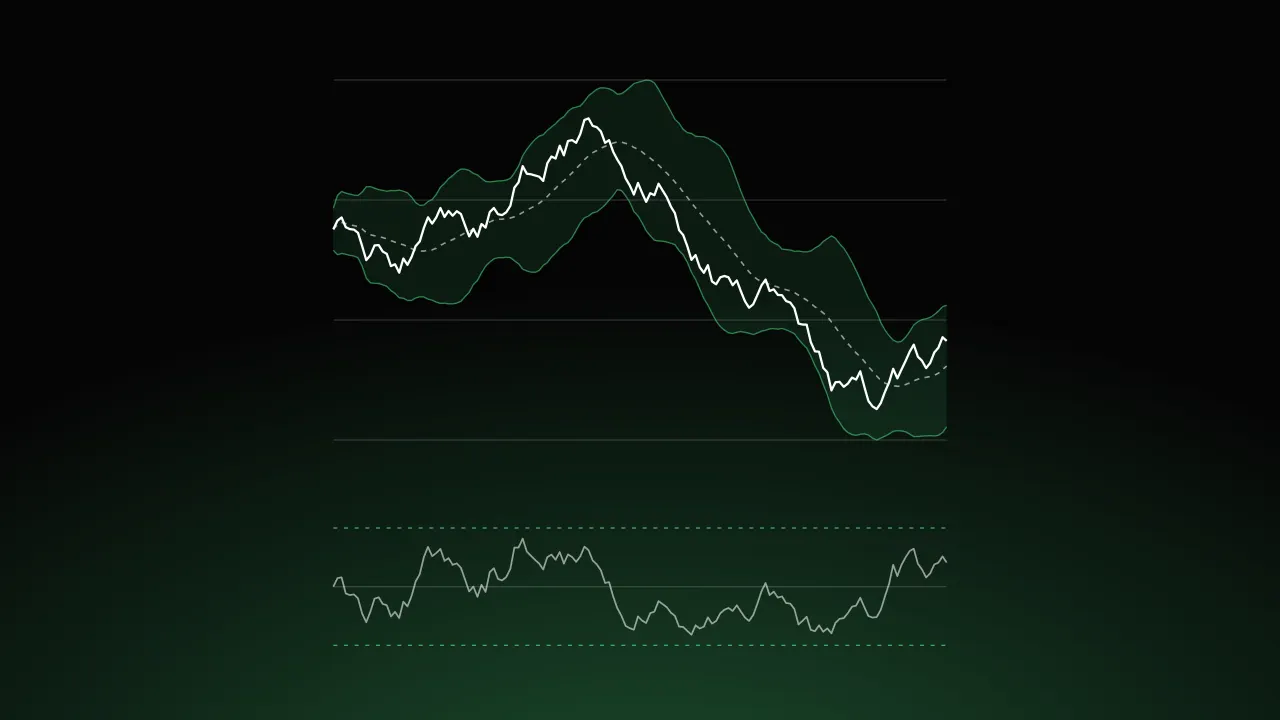
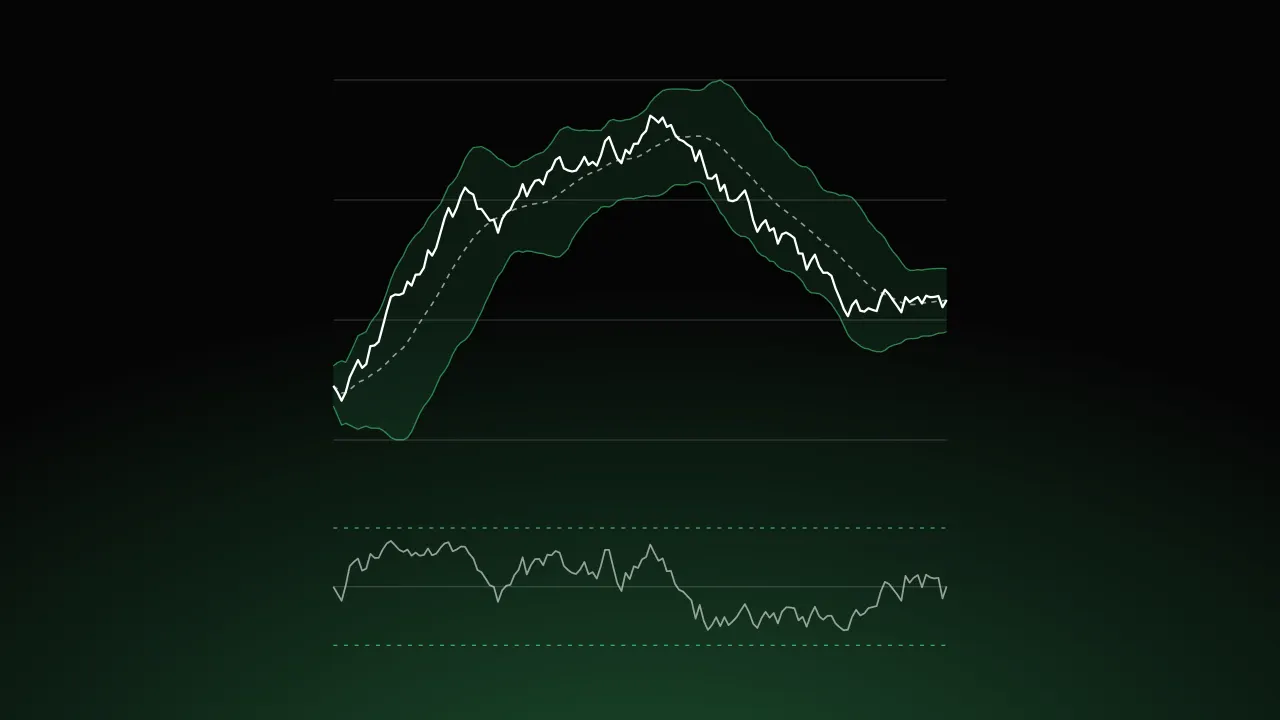
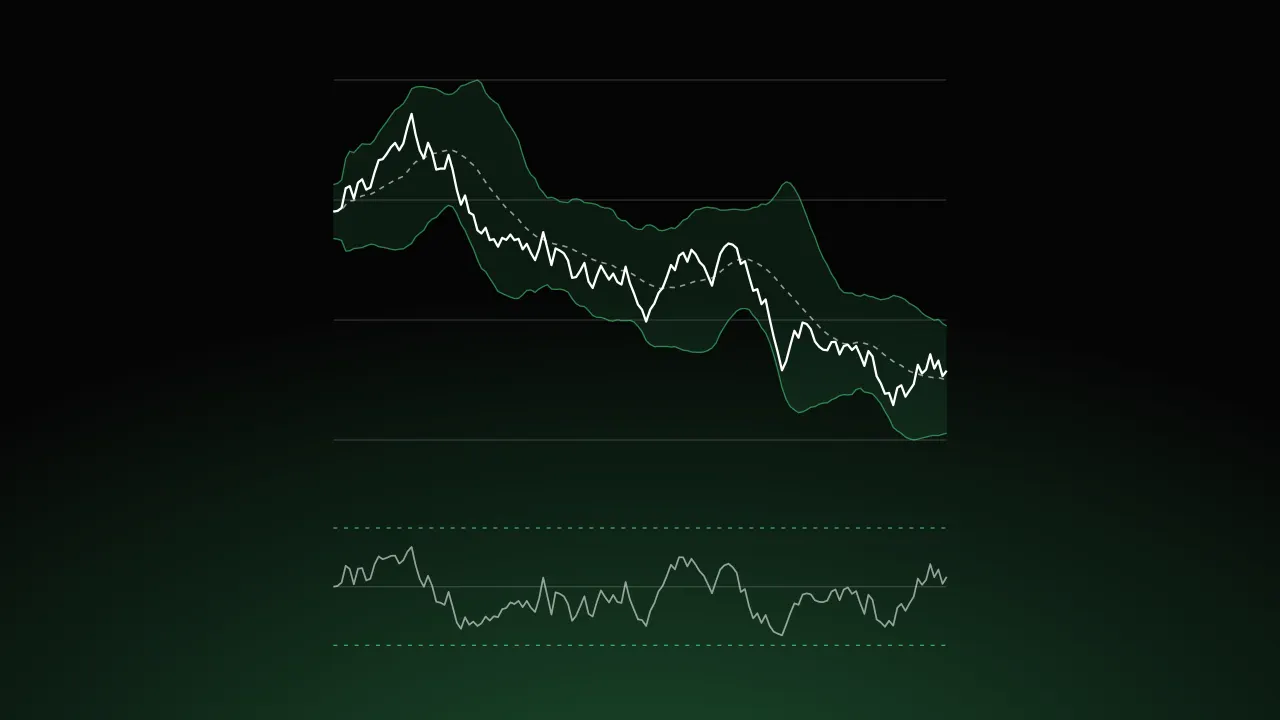
A made-up series, and a rule that fires when a point lies far from the average of the points before it. Set how far, and how many points it looks back over.
- synthetic data: not a record of any market
- score: distance from the average, in units of the spread
- Times the rule fired
- 15
- Points outside the band
- 25%
- Longest stretch without firing
- 31 points
- The series
- Synthetic
Narrow the band and the rule fires on noise; widen it and it misses moves. A longer window makes the band slower to follow.
This simulator is an illustration of the principle, with made-up numbers. It does not run the lab's code or show the lab's data, and nothing in it is a measurement.
In this collection
Verace Aurum
A six-stream multi-timeframe transformer for gold spot (XAUUSD) price forecasting and position decisions, trained in four phases
Trading and markets · Attention and sequence models · Training and optimisation
Verace FastKernel
Header-only C++20 array, dataframe and autograd libraries with a service that compiles, fuzz-checks and benchmarks numerical kernels
Tools and infrastructure · Algorithms and systems · Training and optimisation

Verace Filament
A neuro-symbolic pipeline for instance segmentation of solar filaments in full-disc H-alpha images, tuned for Panoptic Quality
Biology and data science · Training and optimisation

Verace Flotilla
A templated family of software engines, each organised around a named physical or mathematical invariant, spanning code tooling, systems and trading
Tools and infrastructure · Algorithms and systems · Trading and markets
Verace Gapline
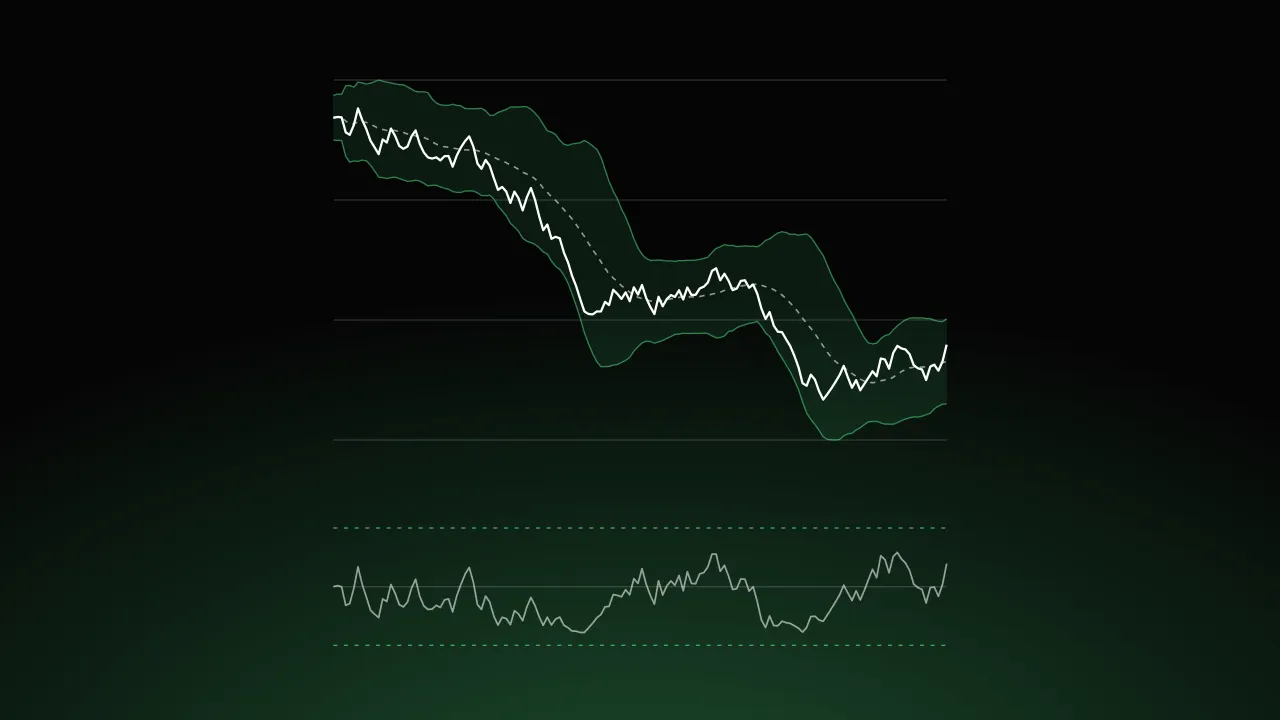
Fair value gap and session-filtered backtests with an asynchronous order loop for bitcoin and gold-proxy markets
Trading and markets
Verace Granule
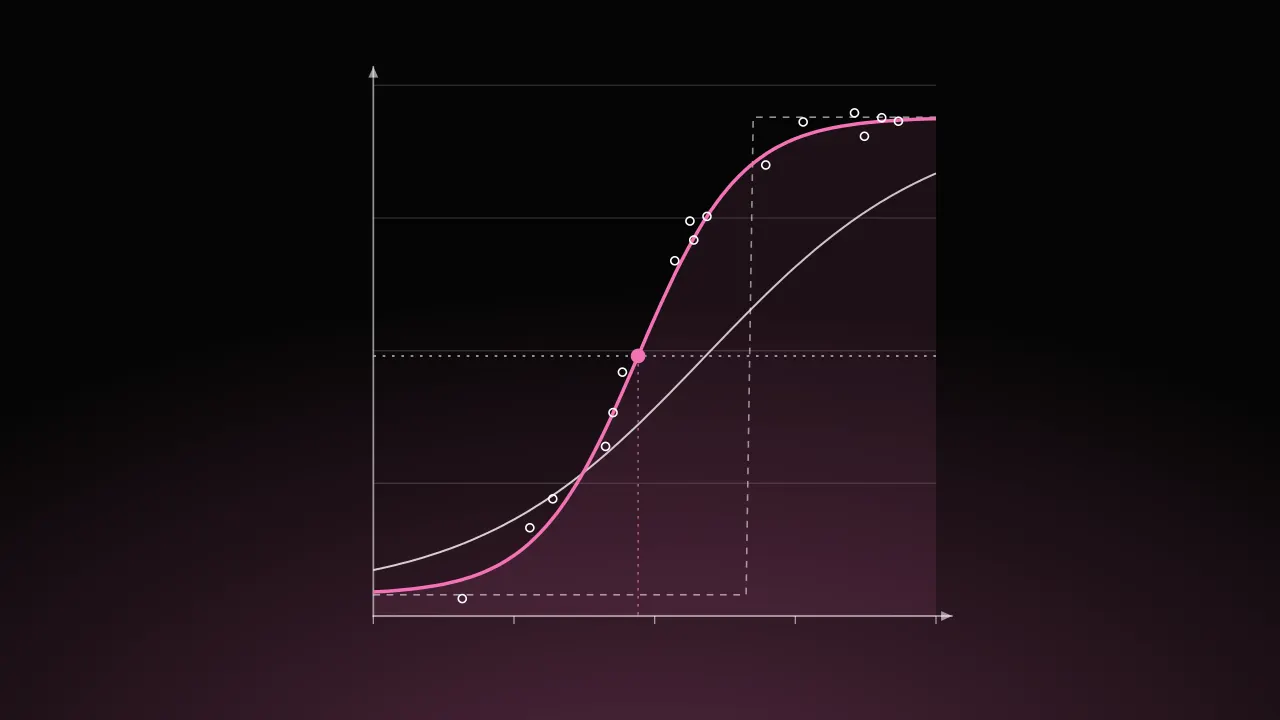
An image-to-grain-size pipeline that predicts cumulative soil grain size distribution curves from smartphone photographs
Biology and data science · Algorithms and systems
Verace Parity
A statistical-arbitrage pairs-trading engine combining cointegration, Ornstein-Uhlenbeck z-score barriers and drawdown-constrained position sizing
Trading and markets · Algorithms and systems
Verace Tradewind
A spot-market trading loop built from heuristic signal modules, an order-execution pricer, exit rules and an SQLite trade ledger
Trading and markets · Algorithms and systems
Architecture
Instanton entry signal
Turns a density estimated from tick volatility or order-book depth into a probability-like score. A position is entered when the score clears a threshold.
Hamiltonian pair router
Scores each candidate pair from book imbalance, the instanton score and the spread. The next capital tranche goes to the highest-scoring pair.
Adaptive exit logic
Sets a take-profit price that widens with imbalance or breakout probability. Resting sell orders that have moved too far above the best ask are cancelled and re-placed.
Tick-replay backtesters
Replay 60,000 or more recorded trade ticks through a single-position scalper with fees, targets, stops and a tick timeout, then write markdown performance reports.
Paper-trading harnesses
Poll market prices and simulate virtual fills from a simulated starting capital of 20 USDT. One harness credits synthetic spread profit rather than modelled fills.
Read-only market scanner
Ranks triangular conversion routes by net return after three taker fees, and ranks perpetual funding rates by annualised yield, without placing orders.
Monitoring dashboard and supervisor
An HTTP dashboard on port 8888 serves a JSON status endpoint and an equity chart. A watchdog restarts the dashboard and the trading loop if either stops.
Trade record store
An SQLite trade table with one row per order: timestamp, symbol, side, order id, quantity, price, USDT value, profit and status.
Engine scaffolding generator
Writes identical database, physics, daemon and test modules into about 80 engine codebases from templates, varying only the title.
Implementation
Mechanisms as they are implemented in the source code, with the constants the code uses.
- Instanton tunneling probability
- In the single-asset backtester the entry score is with and . The density is kept in , and the backtester enters long when .
- Volatility-derived book density
- The backtesters set , where is the standard deviation of recent tick returns. The code uses in the single-asset backtest and in the multi-asset sweep, so low volatility gives high density and lowers .
- Order-book density from depth
- The continuous trading loop computes over the top 10 book levels, clamped to . This value is fed into the instanton formula with .
- Kinetic pressure imbalance
- The code computes over the top 10 bid and ask quantities, with a small constant added to the denominator, so . It is used to rank pairs and to scale profit markups.
- Hamiltonian pair selection
- The continuous loop scores each of 8 pairs as , where is the spread in percent, and buys the argmax pair with a tranche of at least 7.50 USDT. A separate imbalance-ranked scalping engine uses the simpler score over SUI, SOL and DOGE pairs.
- Soliton take-profit multiplier
- The continuous loop places its take-profit at . The imbalance-ranked scalping engine uses for new entries and for relocated orders.
- Market entry with resting take-profit
- The market-entry script buys a small tranche at market and computes the average fill price as , cumulative quote quantity over executed quantity. It then rests a good-till-cancelled sell at raised by a default target of 0.45%.
- Raychaudhuri stale-order relocation
- The continuous loop cancels resting sells priced more than 0.35% above the best ask , pauses 0.3 s, and re-places them at . The imbalance-ranked scalping engine treats a sell above as stranded and re-posts it near the top of the book after 0.4 s.
- Tick-replay scalper loop
- The backtester holds one long position at a time, sized at the minimum of 8.5 and the maximum of 5.5 and 35% of capital. It charges 0.075% fees on each side and exits on target, stop or a 120-tick timeout, which the reports call the Raychaudhuri horizon, while tracking peak drawdown.
- Triangular route return ratio
- The scanner prices the route USDT to X at the ask, X to BTC at the bid, and BTC to USDT at the bid as with . It reports the return in percent as .
- Funding rate annualisation
- The scanner converts an 8-hour funding rate into in percent. It labels the sign of the rate with the corresponding delta-neutral spot and perpetual pairing.
- Synthetic spread profit model
- The demo simulator credits each cycle with , where is the trade size and the fee defaults to 0.075%. The credited profit is never negative and does not depend on the prices the demo fetches.
- Synthetic multi-asset selector
- The multi-asset sweep backtester scores assets as , with per-asset volatility weights from 0.85 to 2.6, and enters when . Only ETH prices are traded, so the asset choice has no effect on results.
- Watchdog respawn
- The process supervisor checks every 3.0 s whether the dashboard and the trading loop are running by matching process command lines with pgrep. It restarts any missing process as a detached session.
Results
From the lab's own experiments and records. They have not been independently replicated.
Allocator mirror backtest lost 2.02%
The lab's 2-tranche mirror of the trading loop's allocator, run on 80,000 recorded ticks, lost 2.02% over 193 trades. It recorded a 48.19% win rate, a profit factor of 0.78 and a maximum drawdown of 2.06%.
Fee-calibrated multi-asset run lost 41.37%
The 8-pair instanton router backtest on 60,000 ticks lost 41.37% over 204 fills, with a 15.69% win rate and a profit factor of 0.08, despite targets scaled above the round-trip fee.
Maker-fee variant lost 0.23%
With a 0.02% maker fee model and an instanton barrier of 0.062, the evaluation records report a 0.23% loss over 25 fills, a 48.00% win rate and a profit factor of 0.80.
Single-asset instanton scalper lost 0.19%
The ETH tick-replay backtest made only 5 trades. It recorded a 60.00% win rate, a profit factor of 0.43 and a 0.19% net loss.
Micro-spread report is internally inconsistent
One report states +39326.35% with a 14.36% win rate, a profit factor of 0.06 and 0.00% drawdown. A profit factor below 1 means losses exceeded gains, so the headline figure contradicts the report's own metrics.
Yantra engine figure conflicts with other reports
A report from the Yantra-named backtest engine gives +606196.99%, a figure the lab's records note as conflicting with the other reports.
Demo profits are synthetic
The paper-trading demo credits a random spread gain with a floor of 1.20 per cycle, and the market-stream demo adds 0.15% of the SOL bid every cycle. Neither figure depends on simulated fills.
Design report and documentation differ from code
The multi-asset design report gives thresholds of 0.045 for and 0.35 for , while the selector code requires and trades only ETH prices, so its asset choice has no effect. The documentation says order relocation guarantees immediate execution, but the re-posting code places limit sells above the best ask, which does not ensure it. One compounding bot script creates its trade table but implements no trading loop, despite its messages.
Concepts
- Physics-named heuristics
- The shared trading code names its signals after constructs from gravitational physics: instantons, the Raychaudhuri equation and Hamiltonians. In the code they are short closed-form scores over book depth, spread and volatility, not physical models.
- Instanton tunneling probability
- A probability-like entry score that falls off exponentially with a barrier parameter derived from market density. The backtest reports use thresholds of 0.045, 0.06 and 0.062.
- Raychaudhuri horizon
- The shared code's name for the maximum holding time of a position, counted in ticks: 120 ticks in the single-asset backtest and 90 in the maker-fee variant. The same name is used for relocating stale orders.
- Order-book imbalance
- The normalised difference between bid and ask quantity at the top levels of the book. The shared code uses it as a proxy for short-term buying pressure.
- Two-tranche allocator
- In the mirror backtest, the trading loop's allocator splits the simulated 20 USDT starting capital into two tranches of 6.50 to 7.50 USDT, keeping each order above a 5.00 USDT minimum notional.
- Fee drag
- Each round trip pays a fee on both sides, 0.075% per side in most of the code. A target of a few tenths of a percent therefore leaves little margin, which the fee-calibrated report addresses by scaling targets to several times the round-trip fee.
- Profit factor
- Gross profit divided by gross loss. A value below 1 means losses exceeded gains, which is what every backtest report of the shared trading code that gives a profit factor records.
- Triangular arbitrage
- Converting through three currency pairs and back to the starting currency. The route is profitable only if the product of the exchange rates, after three fees, exceeds 1.
- Cash-and-carry funding
- A delta-neutral pairing of a spot holding with an opposite perpetual-futures position, whose return comes from the periodic funding rate. The scanner only annualises and ranks these rates.
- Synthetic profit in demos
- Two demo programs add gains drawn from fixed formulas, not from simulated fills. Their reported session profits carry no evidence about the strategy.
- Templated engine fleet
- About 80 engine codebases generated from identical templates with a 16-thread pool. They differ only in title, so they are copies rather than distinct strategies.
About this page
Written from the lab's own documents and source code. Figures and results are the lab's measurements as it recorded them at the time, and have not been independently replicated.
Market results here are backtests and logs kept by the lab. Nothing on this page is financial advice.
Published under the PolyForm Noncommercial License 1.0.0: free for noncommercial use.